Monday, July 16, 2012

Shipmate of the Week – AUX Jake Shaw

Posted Friday, July 6, 2012 by LT Stephanie Young on the CG Compass Blog

Auxiliary University Program cadet JD DeCastra sudying a nautical chart at Coast Guard Station Daupin Island. U.S. Coast Guard photo.

Auxiliary University Programs cadet JD DeCastra sudying a nautical chart at Coast Guard Station Daupin Island. U.S. Coast Guard photo.

For university students looking for ways to serve their country while pursuing a degree, finding a fit in the U.S. Coast Guard can be tough. With limited programs available, and no formalized ROTC, students wishing to learn more about America's Coast Guard often fall short.

Cue the Coast Guard Auxiliary. Using their all-volunteer force, they established a tailor-made program for college students interested in serving. Auxiliary University Programs, organized by a group of Auxiliary leaders, prepares students for success in service and leadership to their community and country with real-world Coast Guard experience.

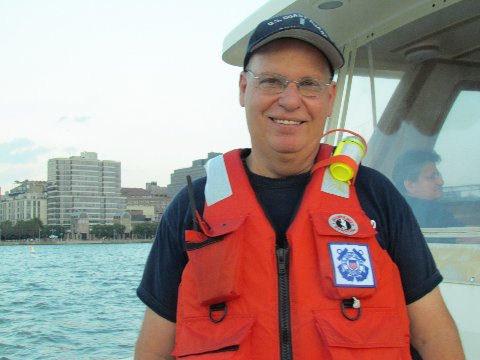
Auxiliarst Jake Shaw serves as one of three branch assistants in the Auxiliary University Programs. U.S. Coast Guard photo.

Auxiliarst Jake Shaw serves as one of three branch assistants in the Auxiliary University Programs. U.S. Coast Guard photo.

One of the Auxiliary members leading the charge to encourage university students to get involved is Jake Shaw. Shaw serves as one of three branch assistants in the programs, leading the education branch. In his role he gets to interact with prospective students, current Auxiliary members and graduates who have gone on to serve in active duty or reserves.

Just as members of the Auxiliary come from a wide range of backgrounds, Shaw seeks to capitalize on the unique skills and traits college-aged members of the university program bring to better the service.

"Enthusiasm, a willingness to learn and serve and boundless energy are the greatest things that these students bring to the Coast Guard Auxiliary," said Shaw. "They also are great 'free-thinkers' and come up with fresh new ideas on how to solve issues. Many of these students are in curriculums, from engineering to political science, computer systems to nuclear studies, that can offer help to the Coast Guard of the future."

In the coming year, Shaw and the program's leaders plan to broaden their scope in working with students and their specialized backgrounds, including information technology, education and public policy. Shaw and his team hope by keying in on university student's skills, the Coast Guard can achieve organizational goals, particularly in mission execution, mission support and force readiness.

Like their Auxiliary counterparts, participants in the program – called cadets – can serve ashore, on the water or even in the air.
Cadets have worked at small boat stations, attended aviation-training sessions, educated recreational boaters and even worked to rebuild their community in tornado recovery efforts.

"I have been especially impressed with our Auburn University program here in Sector Mobile," said Capt. Don Rose, commanding officer of Sector Mobile. "This has brought exceptionally talented science, business and engineering students to Coast Guard Station Dauphin Island where they have supported station boat crew operations…The program takes some more senior Auxiliary leadership to guide – but it pays big dividends all around."

Auxiliary University Programs cadet Cassandra Smith at the helm of a response boat at Coast Guard Station Dauphin Island. U.S. Coast Guard photo.

Auxiliary University Programs cadet Cassandra Smith at the helm of a response boat at Coast Guard Station Dauphin Island. U.S. Coast Guard photo.

There have been a number of university program cadets who have gone on to serve in the Coast Guard and other branches of the service, which Shaw admits is quite a track record for a program only five-years-old.

Many students join as active duty members of the Coast Guard. Others pursue careers in the maritime or homeland security community with a broader understanding of the Coast Guard and public service. There is no service obligation so all students have the opportunity to apply their training and experience as successful leaders in whichever career they choose.

For Shaw, the time he puts in to the program and the countless hours he invests in each student is all worth it. To him, these students aren't just the future of the service, but the future of our country.

"It is both an honor and a pleasure to work with these fine young men and women. They are terrific and I am very proud of each and every one of them. Their work ethics, selflessness, and commitment to service continue to impress me and give me comfort to know that with these leaders of the future, our country will remain strong for many years to come."

Auxiliary University Programs Unit Auburn cadets honoring retired Sgt. Maj. Bennie Adkins, U.S. Army Distinguished Cross Recipient, at East Alabama Medical Center, Ala. U.S. Coast Guard photo.

Auxiliary University Programs Unit Auburn cadets honoring retired Sgt. Maj. Bennie Adkins, U.S. Army Distinguished Cross Recipient, at East Alabama Medical Center, Ala. U.S. Coast Guard photo.

Sunday, July 15, 2012

US Coast Guard Auxiliary Volunteers Work To Fill Fishing Boat Safety Check Gap

WASHINGTON —The U.S. Coast Guard's commercial fishing vessel examination program has helped save lives since 1991, but a new federal requirement means civilian volunteers of the Coast Guard Auxiliary will soon have a bigger role in checking boats and equipment headed out to sea.

Ken Lawrenson coordinates the work of civilian, active duty Coast Guard and Coast Guard Auxiliary vessel examiners throughout Alaska. He said harvesting crab, cod and halibut from the rich fishing grounds of the North Pacific and Bering Sea is "one of the most dangerous jobs a person can have."

Alaska has fewer than 30 qualified examiners to check about 3,800 vessels that will fall under the new requirement, and other regions face similar potential work overloads.

"I wish I had four times as many," Lawrenson said. "We're looking to the Auxiliary to augment the workforce."

Vessel safety examinations have been voluntary so far, but a provision in the federal Coast Guard Authorization Act of 2010 makes them mandatory for all fishing vessels operating in U.S. waters. The provision is expected to go into effect in late 2012.

"We're looking at an increase in workload without the proportionate increase in resources," Lawrenson said.

American citizens over 17 years old with experience or interest in the fishing industry can join the Coast Guard Auxiliary and help this effective program improve safety in America's commercial fishing fleet.

Nationwide, the Auxiliary currently has 216 volunteers qualified to perform commercial fishing vessel exams, but many more are needed.

Al Morris, an Auxiliary member and former commercial fisherman in Kodiak, Alaska, recently underwent a week of intense vessel exam training in Yorktown, Va., working alongside active duty trainees. He has seen firsthand the improved safety record of fishing boats that participate in the vessel examination program.

"I felt that I could help fishermen follow the rules," Morris said.

Fishing Boats

Wednesday, July 11, 2012

City of Water Day

Saturday, July 14th, will be the City of Water Day Festival from 10 a.m. to 4 p.m. on Governors Island and at Liberty State Park and will feature day-long activities includingfree boat rides aboard 15 different vessels at both locations throughout the day. Other vessels will be open for dockside tours. The USCG Auxiliary will have a table at Liberty State Park. Free ferry service will run from Pier 6, lower Manhattan, to Governors Island, and Miss Gateway Ferry from there to Liberty State Park. More informationhttp://waterfrontalliance.org or call 212 935-9831.

The event is sponsored by the Metropolitan Waterfront Alliance to emphasize our waterfront and encourage people to come out and enjoy it!  Both locations will have ship tours and boat rides and free kayak lessons, as well as educational programs for children  There were over 11,000 visitors last year, and several hundred came via kayak,  and this year they are expecting more!!

Patrol Boat from USCG Auxiliary Flotilla 12-01 which actually rescued several kayakers
Kayakers arriving on Governors Island
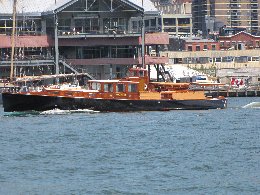
Pilot Boat was open for boat tours at Liberty State Park in New Jersey
USCG Cutter THUNDERBAY open for tours at Yankee Pier on Governors Island
S/V SHEARWATER at Yankee Pier
Kayakers crossing from Brooklyn
Paddleboarder crossing Buttermilk Channel
Sailboat in Buttermilk Channel
US Army Corps of Engineers HAYWARD on Governors Island
Offshore Sailing School about to dock on Pier 101, Governors Island
Classic motoryacht DOLPHIN by the South Street Seaport Museum
Crew member, Steve Maccio, on AMIGO IV
 
 
(Article and Photo Courtesy: Hope Wright
 2011 City of Water Day, aboard the AMIGO IV)
 

Monday, July 9, 2012

4th of July Patrol by Division 12


Some photos taken on patrol for the 4th of July aboard the AMIGO IV. The AIMGO IV is from Flotilla 12-01 with Peter Talamo as Coxswain. Hope Wright had stern watch that day and was able to catch some amazing shots. 


July 3rd at the Worlds Fair Marina, Flushing Bay
Kayakers out of the Downtown Boathouse
 
John Frassanito, SO-NS, Flotilla 12-08 
 
 
                                                         (Photos courtesy: Hope Wright, SO-PA, Flotilla 12-01)

Tuesday, July 3, 2012

HAPPY 4th of JULY SHIPMATES!

VIGILANCE AND INCREASED RISK DURING SUMMER HOLIDAY OPERATIONAL AND SURGE PERIOD

1. I am personally sensing the increased operational and personnel tempo involving elevated levels of operational risk throughout the Sector Long Island Sound area. This weekends case load was notable, expected with hot weather and an approaching 4th of July holiday, which normally signify a peak workload for our Coast Guard forces and port partners. Upcoming large scale marine events, such as Operation Sail 2012 activities in Southeastern Connecticut, just add to the aggregate challenge of the summer period.

2. Our core purpose of being Semper Paratus and vigilant will be key to our overall success in managing the collective levels of risk generated during these demanding summer operations. Our Coast Guard forces (Active Duty, Reserve, Aux, and Civilian) will maintain mission readiness and integrity throughout this Captain of the Port zone during this increased risk period and by working with other federal, state, local, tribal, private sector and event sponsors, we will achieve an outcome of safe, secure and successful marine events and case management.

3. I count on each and every member to exercise sound judgment and personal risk management. We are a crew of professionals. You must ensure you are ready to stand the watch or support those who do.  I trust our leadership and field commanders to communicate a confidence in everyone's contribution in meeting this challenge and maintaining our vigilant prevention and response posture. While we stand the watch for our communities, I take great comfort knowing every member of our team will do their part and take care of one another. We must come back from every mission, every time. Safety must always come first.

4. To the front-line forces, to the background support community sustaining our operations, to the extended station backfill watchstanders, crews, reserve and auxiliary, and to our multiple layers of port partners at all levels that will be working side by side with us, I send my sincerest appreciation for your commitment to duty and service to the public, ultimately earning our nations trust.

5. Commanding Officers, Officers in Charge, and Detachment Supervisors are charged with sharing my message with their crews.

Semper Paratus.

6. Captain Vojvodich, Sector Commander, sends.

Wednesday, June 27, 2012

Unfilled Quotas Have Lasting Impact on C School Budget.

For every filled C-School the Auxiliary gains the benefit of a better prepared and trained member whether it is in Aids to Navigation or Spatial Dis-orientation training on the Operations side to Public Affairs and Leadership training in other areas critical to the success of the Auxiliary and Coast Guard missions. It also gains credibility to the amount of quotas needed for C-School training as a whole.


To maintain this valuable training across the board the quotas assigned each year need to be used properly and filled to a "wait list" status. Each year quotas are lost by not being used and this has an ripple effect into future years. With budget restraints of almost unprecedented proportions looming in the Auxiliary training future it is more than great to have all quotas filled it is imperative to have all quotas filled.


Please go out and look at all the vacancies on the C school web site and where there is a spot left see if you have a member that would like to attend or is needed to attend to give you a better program. Then get the STTR signed and sent into DIRAUX immediately as time is not on your side now. There are only 14 days left for entering into the C School system and your help to ensure a viable C School system is around in the future is needed. Please sign your qualified members up now.


Below is a course that has been getting great reviews all year and many wish to take, AMLOC 05A. Please call your members that this will apply to and sign them up now.


Thanks,


V/r,


Tracy DeLaughter

BC-TLM AMLOC 05A